Illegal Termination Lawyer
Protecting the Rights of Employees, Senior Professionals, Executives and Corporate Leaders
Losing your job unexpectedly can be one of the most stressful experiences in your professional life. Whether you have been terminated without justification, forced to resign, dismissed during pregnancy, placed on an unfair Performance Improvement Plan (PIP), denied your contractual dues or subjected to an arbitrary employment decision, understanding your legal rights is the first step towards protecting your career and financial interests.

At Divine Lawyers, we represent employees across India in complex employment disputes involving multinational corporations, technology companies, start-ups, financial institutions, consulting firms and other organisations. We advise professionals at every stage of their careers from software engineers and managers to senior executives, directors and CXOs on challenging unlawful employment actions and negotiating fair resolutions.
Every employment dispute is unique. While not every termination is illegal, many employers fail to follow their contractual obligations, internal policies, or applicable legal principles before taking adverse action. A timely legal review can help you understand whether your termination, dismissal or forced resignation gives rise to legal remedies or a stronger negotiating position.
Whether your objective is reinstatement, a fair severance package, correction of employment records, recovery of unpaid dues, issuance of a respectful relieving letter or an amicable settlement, our approach is focused on protecting your legal rights while working towards practical and commercially sensible outcomes.
Have You Experienced Any of These Situations?
Terminated without any warning or explanation
Forced to resign instead of being terminated
Placed on a questionable Performance Improvement Plan (PIP)
Terminated shortly after announcing your pregnancy or returning from maternity leave
Asked to leave due to organisational restructuring or role redundancy
Denied your Full & Final Settlement
Employer refusing to issue a Relieving Letter or Experience Letter
Salary, bonus, gratuity or stock benefits withheld
Threatened with a negative Background Verification (BGV)
Pressured into signing a Mutual Separation Agreement
Retaliated against after raising complaints with HR or management
Senior executive exit without fair severance compensation
If you identify with any of the above situations, obtaining timely legal advice can help you understand your rights and evaluate the options available to you.
Why Employees Across India Choose Divine Lawyers

At Divine Lawyers, we understand that employment disputes are not merely legal issues—they often involve careers built over many years, financial security, professional reputation and future opportunities.
Our practice focuses on strategic employment advice, carefully drafted legal notices, negotiated settlements and representation in appropriate legal proceedings where required.
We regularly assist clients in matters involving:
Our objective is not merely to initiate litigation. Wherever possible, we strive to secure commercially practical and legally sustainable resolutions through strategic negotiations and mediation, while remaining fully prepared to pursue appropriate legal remedies when circumstances require.
Illegal Termination in India: Understanding Your Legal Rights
One of the most common misconceptions among employees is that an employer can terminate employment at any time without consequences. While employment contracts often permit termination in accordance with agreed terms, employers are still expected to comply with applicable laws, contractual obligations, principles of fairness and, depending upon the circumstances, the principles of natural justice.
The legality of a termination depends upon several factors, including:
- The nature of the employment relationship.
- The terms of the employment contract.
- Whether the employee falls within the definition of a "workman" under the Industrial Disputes framework or occupies a managerial or supervisory position.
- The employer's internal policies.
- The reasons for termination.
- Whether due process was followed.
- Whether the termination was discriminatory, retaliatory or in breach of contractual obligations.
Accordingly, the answer to the question “Was my termination illegal?” is rarely straightforward and requires a careful examination of the facts and applicable legal principles.
Employees frequently approach us after experiencing situations such as:
- Termination immediately after maternity leave.
- Termination during pregnancy.
- Being placed on a Performance Improvement Plan shortly before dismissal.
- Sudden allegations of poor performance despite years of positive reviews.
- Pressure to resign instead of receiving a termination letter.
- Retaliation after raising complaints with Human Resources.
- Withholding of bonus, stock options or Full & Final Settlement.
- Refusal to provide relieving or experience letters.
- Executive exits involving inadequate severance compensation.
Each of these situations presents different legal and strategic considerations. Early legal advice often enables employees to preserve important evidence, avoid inadvertent mistakes and engage with employers from a position of greater clarity.
At Divine Lawyers, we believe that every employee deserves to understand their legal rights before making significant decisions that may affect their career and financial future.

TABLE OF CONTENTS
01. What is Illegal Termination?
02. When Can a Termination Become Unlawful?
03. Difference Between Lawful and Illegal Termination
04. Rights of Employees in India
05. Rights of Workmen and Managerial Employees
06. Common Types of Illegal Termination
07. Forced Resignation vs Termination
08. Performance Improvement Plans (PIP) and Termination
09. Pregnancy and Maternity-Related Termination
10. Wrongful Dismissal of Senior Executives
11. Role Redundancy and Layoffs
12. Full & Final Settlement Rights
13. Relieving Letter and Experience Letter Disputes
14. Background Verification (BGV) Issues
15. Recovery of Salary, Bonus, Gratuity and Other Employment Benefits
16. Legal Remedies Available to Employees
17. Sending a Legal Notice to the Employer
18. Settlement Negotiations and Mediation
19. Litigation Before Appropriate Forums
20. Common Mistakes Employees Should Avoid
21. How Divine Lawyers Can Help
22. Success Stories
23. Frequently Asked Questions
24. Contact an Illegal Termination Lawyer
Why Choose Divine Lawyers for Illegal Termination Disputes?
Employment disputes are unlike most other legal disputes. They often involve not only questions of law but also careers, professional reputation, future employability, financial security and emotional well-being. A single employment decision can affect an individual’s income, background verification, industry reputation and long-term career prospects.
At Divine Lawyers, we understand that every employment dispute requires both legal analysis and commercial understanding. Before recommending any course of action, we carefully evaluate the factual background, employment documents, company policies, contractual obligations, applicable legal framework and the practical objectives of the client.
We appreciate that different clients seek different outcomes. While some employees wish to challenge the legality of their termination before the appropriate forum, others may prefer an amicable settlement, a respectful exit, correction of employment records, a fair severance package or protection of their professional reputation. Our advice is tailored to the specific circumstances and objectives of each client.
Unlike a one-size-fits-all approach, we develop a legal strategy after analysing the strengths, risks and commercial realities of each matter.
Detailed Case Assessment
Every employment dispute begins with a comprehensive review of:
- Employment Agreement
- Offer Letter
- Appointment Letter
- Employee Handbook
- Company Policies
- Performance Reviews
- HR Communications
- Emails
- WhatsApp Communications (where relevant)
- Internal Complaints
- Investigation Reports
- Termination Letter
- Separation Agreement
- Mutual Separation Agreement
- Full & Final Settlement Documents
A careful examination of these documents often helps identify legal issues, procedural lapses, contractual breaches or inconsistencies that may significantly influence the strategy adopted.
Our Approach to Employment Disputes
At Divine Lawyers, every matter is approached through a structured process designed to protect the client’s legal rights while keeping practical and commercial considerations in mind.
Case Assessment
Review of contracts, policies, HR records & communications.
Strategic Advice
Assessing legal sustainability & available remedies.
Litigation
Representation before the appropriate forum, if needed.
Negotiation
Settlement, severance & separation discussions.
Legal Notice
Setting out facts, obligations & relief sought.
Carefully Drafted Legal Notices
In many employment disputes, the first legal notice can significantly influence the future course of the matter.
Where appropriate, we prepare comprehensive legal notices that clearly set out the relevant facts, contractual obligations, legal position and relief sought. A professionally drafted legal notice often provides an opportunity for constructive dialogue before parties become involved in prolonged litigation.
Strategic Legal Advice
Before initiating any legal proceedings, we advise clients regarding:
- Whether the termination appears legally sustainable.
- Whether the matter is contractual, statutory or both.
- The legal remedies that may be available.
- The strengths and potential challenges in the matter.
- The most appropriate strategy considering the client's professional and commercial objectives.
Litigation, Where Necessary
Where an amicable resolution is not possible, we advise and represent clients before the appropriate legal forums depending upon the nature of the dispute and the applicable legal framework.
Each matter is assessed individually to determine the appropriate legal remedy available under the relevant employment, labour, contractual or civil laws.
Negotiation and Settlement
Not every employment dispute requires court proceedings.
Many disputes can be resolved through meaningful negotiations when supported by proper legal preparation.
Where appropriate, we represent clients during settlement discussions relating to:
- Severance Packages
- Executive Exit Negotiations
- Mutual Separation Agreements
- Full & Final Settlement
- Relieving Letters
- Experience Certificates
- Correction of Employment Records
- Withdrawal of Adverse Remarks
- Settlement Agreements
Experience Across Diverse Employment Disputes
Our employment practice includes advising clients in matters involving:
- Illegal Termination
- Wrongful Termination
- Forced Resignation
- Constructive Dismissal
- Performance Improvement Plans (PIP)
- Pregnancy and Maternity-Related Employment Issues
- Executive Exit Negotiations
- Severance Package Negotiations
- Full & Final Settlement
- Salary Recovery
- Bonus and Variable Pay Disputes
- Equity and Stock Benefit Issues
- Gratuity Claims
- Provident Fund Disputes
- Relieving Letter and Experience Letter Disputes
- Background Verification Issues
- Employment Contract Review
- Settlement Agreements
- Workplace Investigations
- Employment Mediation

Our Philosophy
Employment disputes should not always be viewed solely as litigation.
In many situations, the most effective outcome is one that protects the client’s legal rights while also preserving professional reputation, future employment prospects and commercial interests.
Accordingly, wherever circumstances permit, we explore opportunities for constructive dialogue and negotiated resolution without compromising the client’s legal position. At the same time, where legal proceedings become necessary, we are committed to pursuing appropriate remedies in accordance with law.
What Is Illegal Termination?
Understanding Illegal Termination in India
The expression “illegal termination” is widely used, but it does not have a single universal definition applicable to every employment relationship in India.
Whether a termination is legally sustainable depends upon several factors, including:
- The nature of the employment.
- The terms of the employment contract.
- The employee's designation and duties.
- Whether statutory labour protections apply.
- The reasons for termination.
- Whether contractual procedures were followed.
- Whether the employer acted fairly and consistently.
Simply because an employee has been terminated does not automatically mean that the termination is unlawful. Conversely, the existence of a termination clause in an employment contract does not necessarily mean that every termination carried out under that clause is beyond legal scrutiny.
Each matter requires a careful examination of the applicable legal principles and the surrounding facts.
- The employer fails to follow mandatory procedural requirements, where applicable.
- Performance concerns are relied upon without a fair process, where such process is contractually or legally required.
- Full & Final Settlement obligations are not honoured.
- Employment records are inaccurately maintained following separation.
The legal consequences depend upon the specific facts, applicable legislation, contractual terms and judicial principles relevant to the particular employment relationship.
When Can a Termination Raise Legal Concerns?
Depending upon the facts of a particular case, legal issues may arise where, for example:
- The employer acts in breach of the employment contract.
- Contractually agreed notice requirements are ignored.
- Statutory employment protections are violated.
- The termination is alleged to be discriminatory.
- The employee is subjected to retaliation after raising legitimate workplace concerns.
- Arbitrary Performance Management
- Unfair Executive Exit
- Role Redundancy Disputes
- Breach of Employment Contract
- Non-payment of Contractual Benefits
- Withholding of Relieving or Experience Letters
Each situation requires an independent legal assessment.
Illegal Termination Is Not Limited to One Situation
Employees often assume that illegal termination only means being dismissed without notice.
In reality, employment disputes may arise in a wide range of situations, including allegations of:
- Wrongful Dismissal
- Forced Resignation
- Constructive Dismissal
- Retaliatory Action
- Discriminatory Treatment
- Pregnancy or Maternity-Related Adverse Action
Why Early Legal Advice Matters
One of the most common mistakes employees make is waiting too long before seeking legal advice.
Important emails may be lost, settlement proposals may be signed without understanding their legal implications, deadlines may pass, and valuable evidence may become difficult to retrieve.
Obtaining timely legal advice enables employees to better understand their rights, preserve relevant evidence and evaluate the options available before making important decisions that may affect their future employment and legal position.
Rights of Employees in India
#Understanding Employee Rights Under Indian Employment Law
One of the most common questions employees ask after losing their job is:
What are my legal rights?
The answer depends upon several factors, including the nature of the employment, the employee’s designation, the terms of the employment contract, the applicable statutory framework and the facts surrounding the termination.
Contrary to popular belief, there is no single law in India that governs every employment relationship. The rights available to an employee may arise from multiple sources, including employment contracts, labour legislation, constitutional principles, company policies and judicial precedents. Accordingly, every employment dispute requires an individual legal assessment.
At Divine Lawyers, we believe that understanding one’s legal rights is the first step towards making informed decisions and protecting one’s professional and financial interests.
1. Right to Fair and Lawful Treatment
Every employment relationship is expected to be governed by fairness, good faith and compliance with applicable legal and contractual obligations.
While employers are entitled to manage their workforce and make commercial decisions, such decisions should ordinarily be taken in accordance with the employment contract, company policies and the applicable legal framework.
Employees who believe that they have been treated arbitrarily, inconsistently or unfairly may benefit from obtaining legal advice to understand whether the circumstances raise any contractual or statutory concerns.

2. Right to the Benefits of the Employment Contract
The employment agreement forms the foundation of the relationship between the employer and the employee.
Depending upon its terms, an employee may be entitled to contractual benefits relating to:
The employment agreement forms the foundation of the relationship between the employer and the employee.
Depending upon its terms, an employee may be entitled to contractual benefits relating to:
- Notice period
- Notice pay
- Salary
- Bonus
- Variable pay
- Incentive payments
- Retention bonuses
- Leave encashment
- Stock options or ESOPs
- Medical benefits
- Insurance
- Retirement benefits
- Confidentiality obligations
- Separation procedures
Where an employer fails to comply with contractual obligations, the employee may have remedies available under law depending upon the specific circumstances.
For this reason, the employment contract is often one of the most important documents reviewed in any employment dispute.
3. Right Against Unlawful Discrimination
Indian law recognises important protections against discrimination in the workplace.
Depending upon the applicable legal framework and facts of the case, adverse employment action based upon protected characteristics may raise significant legal issues.
Examples may include allegations relating to:
- Pregnancy
- Maternity
- Gender
- Disability
- Religion
- Caste
- Race
- Equal opportunity concerns

Every allegation of discrimination requires a careful examination of the surrounding facts, documentary evidence and the reasons advanced by the employer.
4. Rights Relating to Pregnancy and Maternity
Women employees are entitled to important statutory protections under Indian law.
Employment decisions concerning pregnant employees or employees on maternity leave require careful legal consideration.
Questions may arise where adverse action is alleged to have followed:
- Disclosure of pregnancy
- Availing maternity leave
- Medical complications during pregnancy
- Childbirth
- Return from maternity leave

The legality of such actions depends upon the facts of the case and the applicable statutory provisions, including the protections available under the Maternity Benefit Act, 1961, where applicable.
5. Right to Receive Earned Employment Benefits
Even where employment comes to an end, employees may continue to have legal or contractual rights relating to payments and benefits that have already accrued.
Depending upon the circumstances, these may include:
- Outstanding salary
- Incentive payments
- Performance bonus
- Variable compensation
- Gratuity
- Provident Fund
- Reimbursements
- Leave encashment
- Retention payments
- Separation benefits
- Contractual severance
The availability of these benefits depends upon the employment contract, company policies and applicable law.
6. Right to Receive Full & Final Settlement
Following separation, employers generally initiate the Full & Final Settlement process.
The settlement may include payments relating to salary, notice pay, leave encashment, bonuses, reimbursements and other contractual or statutory dues, depending upon the circumstances.
Employees should carefully review the settlement computation before accepting it, particularly where there is any disagreement regarding the calculation of dues or deductions made by the employer.

7. Right to Employment Documents
Employment documents often play an important role in future career opportunities.
Depending upon company policy, contractual terms and the circumstances of separation, employees may receive documents such as:
- Relieving Letter
- Experience Certificate
- Full & Final Settlement Statement
- Salary Slips
- Form 16
- Provident Fund documentation
- Gratuity records
Where disputes arise concerning employment documentation, legal advice may assist in identifying the available remedies

8. Right to Raise Workplace Grievances
Employees are generally entitled to raise legitimate workplace concerns through appropriate internal mechanisms.
Such concerns may relate to:
- Workplace harassment
- Discrimination
- Ethical concerns
- Policy violations
- Retaliation
- Payroll issues
- Performance review concerns
Many organisations maintain formal Human Resources procedures or ethics reporting mechanisms for addressing such grievances.

9. Right to Seek Legal Remedies
Where an employee believes that legal or contractual rights have been violated, various remedies may be available depending upon the nature of the dispute.
These may include:
- Legal Notice
- Negotiation
- Mediation
- Proceedings before the appropriate Labour Authority
- Other statutory remedies, depending upon the facts of the case
- Conciliation
- Civil proceedings
- Contractual claims

The appropriate course of action varies from one case to another and should be determined after obtaining legal advice.
10. Right to Protect Professional Reputation
For many professionals, the consequences of an employment dispute extend beyond immediate financial loss.
Issues such as adverse employment records, incorrect performance assessments, refusal to issue relieving letters, negative background verification concerns and inaccurate internal documentation can significantly affect future career opportunities.
Where appropriate, employees may explore legal options for protecting their professional reputation and ensuring that employment records accurately reflect the circumstances of their separation.

Understanding Your Rights Is the First Step Towards Protecting Them
Every employment dispute is different. While some cases involve straightforward contractual issues, others require consideration of labour laws, statutory protections, internal company policies and judicial principles developed by Indian courts.
Employees should avoid making important decisions—such as resigning under pressure, signing settlement agreements or accepting adverse employment records without first understanding their legal position.
Obtaining timely legal advice can often help employees evaluate their options, preserve important evidence and pursue an informed strategy that aligns with both their legal rights and long-term career objectives.
Workmen vs. Managerial Employees – Why the Difference Matters
One of the first legal questions that arises in any employment dispute is not whether the termination was unfair, but rather which legal framework governs the employee’s relationship with the employer.
Many employees are surprised to learn that Indian employment law does not treat every employee identically. The remedies available following termination often depend upon the nature of the employee’s duties, responsibilities and the applicable legal framework.
Understanding this distinction is important because it influences the legal strategy, the forums that may have jurisdiction and the remedies that may be available.

Who is a "Workman"?
The expression “workman” was defined under the Industrial Disputes Act, 1947 and is now substantially carried forward as the concept of a “worker” under the Industrial Relations Code, 2020 (subject to its enforcement and applicability). Merely looking at an employee’s designation is not sufficient. Courts generally examine the actual nature of duties performed.
Broadly speaking, employees engaged primarily in:
- Technical work
- Skilled work
- Operational work
- Clerical work
- Manual work
may fall within the statutory definition, provided they do not perform predominantly managerial or administrative functions and satisfy the applicable legal criteria.
Whether a particular employee is a workman is always a question of fact and law, determined after considering the employee’s actual role rather than the title mentioned on the appointment letter.
Who is a Managerial or Supervisory Employee?
Many professionals employed in modern corporate organisations occupy managerial, administrative or senior supervisory positions.
Examples may include:
Engineering Managers
Product Managers
Human Resources Managers
Finance Managers
Directors
Vice Presidents
General Managers
Heads of Departments
CXOs
Senior Leadership Professionals
These employees generally exercise decision-making authority, supervise teams, formulate policies, allocate work, conduct performance evaluations or perform managerial and administrative functions.
Whether an employee falls outside the statutory definition of a workman depends upon the actual duties performed and not merely the job title or salary.
Why Does This Classification Matter?
The distinction between a workman and a managerial employee is important because different legal rights and remedies may apply.
Depending upon the facts of the case, this classification may influence:
* the legal forum before which proceedings may be initiated;
* the statutory protections available;
* the nature of relief that may be claimed;
* the legal principles governing the dispute; and
* the overall litigation and settlement strategy.
Accordingly, determining the correct legal framework is often the first step in assessing an employment dispute.

Does Being a Managerial Employee Mean You Have No Legal Rights?
Absolutely not.
This is perhaps one of the biggest misconceptions among corporate professionals.
Employees working in managerial or leadership positions are sometimes incorrectly informed that they have “no legal remedy” simply because they may not fall within the statutory definition of a workman. That is not an accurate statement of law.
While the statutory remedies available to workmen and managerial employees may differ, managerial employees continue to enjoy important legal protections arising from:
- their employment contracts;
- applicable labour and employment statutes, where relevant;
- constitutional principles in appropriate cases involving public authorities;
- company policies and internal procedures;
- the law relating to contracts;
- principles of natural justice, where applicable; and
- judicial precedents governing employment relationships.
Many disputes involving senior professionals are successfully resolved through legal notices, negotiated settlements, mediation or proceedings before the appropriate forum, depending upon the facts of the case.
Special Considerations for Senior Executives
Senior executives often have employment arrangements that are significantly more complex than those of other employees.
Their compensation packages may include:
- fixed salary;
- annual performance bonus;
- retention bonus;
- joining bonus;
- stock options or RSUs;
- ESOPs;
- deferred compensation;
- long-term incentive plans;
- restrictive covenants;
- confidentiality obligations; and
- executive severance provisions.
Accordingly, disputes involving directors, vice presidents, engineering managers, product leaders and CXOs frequently extend beyond the question of termination itself and involve complex contractual and commercial issues.
Resolving such disputes often requires a strategic combination of contractual analysis, negotiation and, where necessary, legal proceedings.

Every Case Requires an Individual Legal Assessment
No lawyer can determine whether an employee is a workman or advise on the appropriate remedy based solely on a job title or salary.
Indian courts have consistently emphasised that the actual nature of duties performed is the determining factor. Two employees holding the same designation may fall under different legal frameworks if their day-to-day responsibilities materially differ.
For this reason, a proper legal assessment typically involves reviewing the employment agreement, organisational role, reporting structure, job responsibilities, company policies and the circumstances leading to the dispute before advising on the available remedies.
At Divine Lawyers, every employment matter is evaluated individually so that clients receive advice tailored to their specific role, the governing legal framework and their professional objectives.

Applicable Laws Governing Illegal Termination in India
There is no single legislation in India that governs every employment relationship or every termination dispute.
The legal framework applicable to an employee depends upon several factors, including the employee’s designation, the nature of duties performed, the terms of the employment contract, the industry in which the employee works, the applicable labour legislation and the facts surrounding the termination.
For this reason, one of the first steps in assessing any employment dispute is identifying the legal framework that governs the particular employment relationship.
At Divine Lawyers, every matter is analysed individually to determine the contractual rights, statutory protections and legal remedies that may be available.
1. Employment Contract
For a large number of corporate employees, particularly those employed in multinational corporations, technology companies, financial institutions, consulting firms and start-ups, the employment contract is one of the most significant documents governing the employment relationship.
An employment agreement may deal with matters such as:
- appointment and designation;
- duties and responsibilities;
- notice period;
- termination provisions;
- confidentiality obligations;
- bonus and incentive structures;
- stock options (ESOPs/RSUs);
- non-solicitation obligations;
- leave entitlements;
- severance benefits; and
- dispute resolution mechanisms.

Where either party fails to comply with contractual obligations, legal issues may arise depending upon the specific terms of the agreement and the surrounding facts.
Accordingly, a detailed review of the employment contract is often the starting point of any termination dispute.
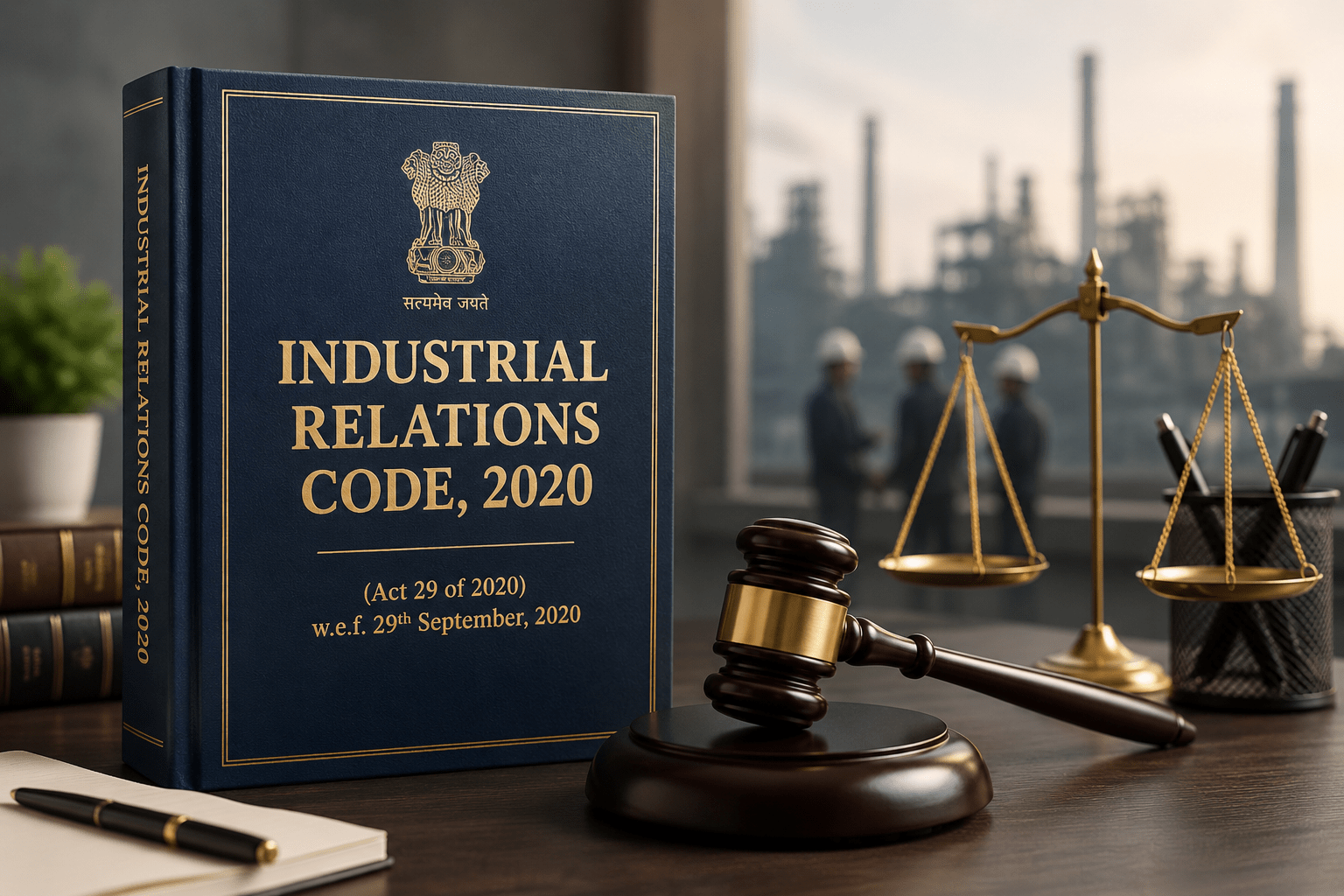
2. Industrial Relations Code, 2020
For employees who fall within the statutory definition of a “worker” (subject to the applicability and enforcement of the Code), employment disputes may be governed by the Industrial Relations Code, 2020 and the legal principles developed under the earlier industrial jurisprudence.
The remedies available under this framework differ significantly from those available to employees whose disputes are primarily contractual in nature.
Determining whether this legal framework applies requires a careful examination of the employee’s actual duties rather than merely the designation mentioned in the appointment letter.
3. Maternity Benefit Act, 1961
Women employees are entitled to important statutory protections under the Maternity Benefit Act, 1961.
Employment decisions concerning pregnant employees or employees on maternity leave require particular care and legal scrutiny.
Disputes may arise where adverse employment action is alleged to have followed:
- disclosure of pregnancy;
- availing maternity leave;
- pregnancy-related medical complications;
- childbirth;
- return from maternity leave; or
- requests for maternity-related accommodations.

Every such case depends upon its own facts, and the chronology of events, internal communications and employer records often become crucial pieces of evidence.
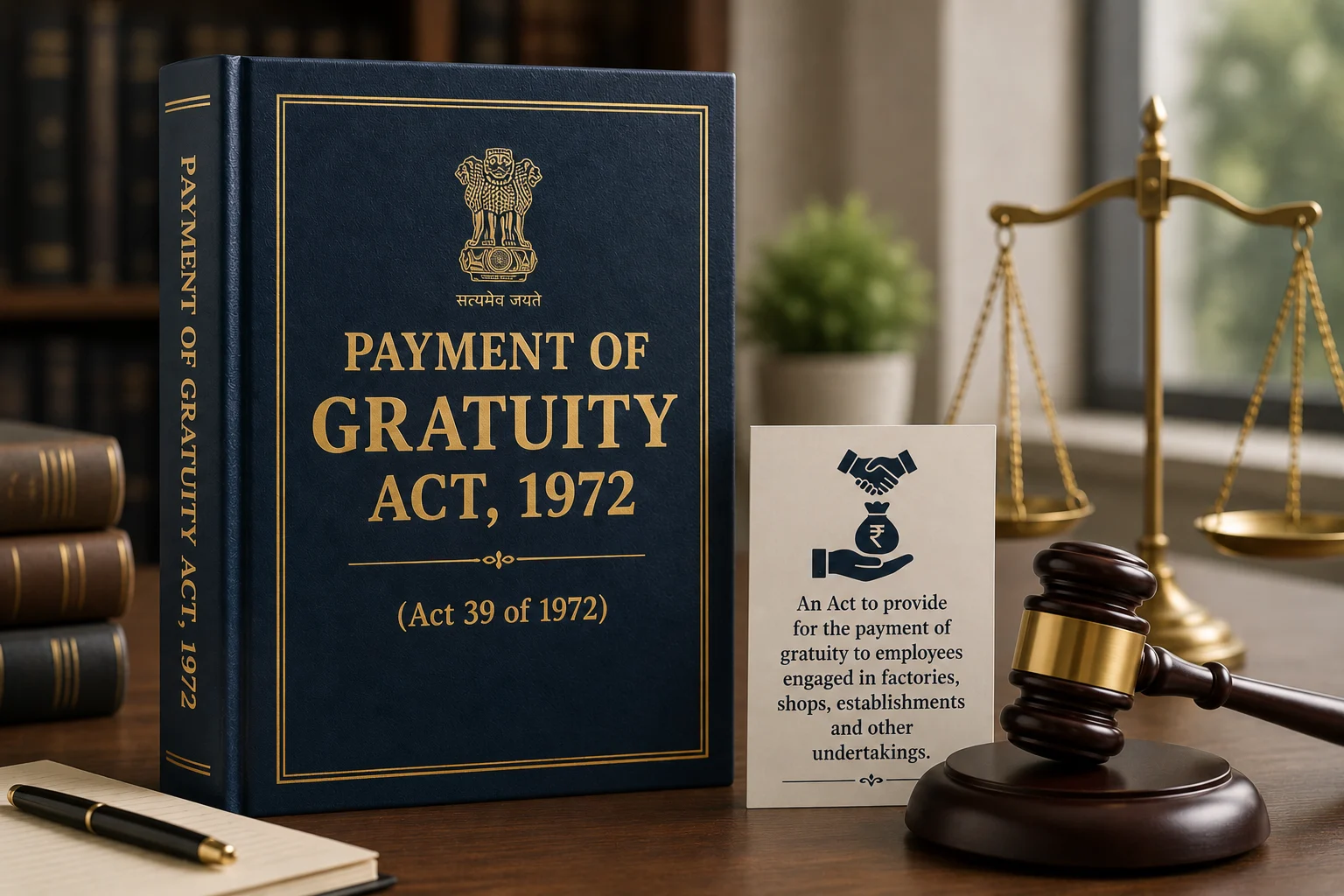
4. Payment of Gratuity Act, 1972
Termination disputes frequently involve disagreements regarding gratuity entitlement.
The Payment of Gratuity Act, 1972 provides statutory rights relating to gratuity for eligible employees, subject to the conditions prescribed under the Act.
Questions commonly arise regarding:
- eligibility;
- calculation;
- delay in payment;
- forfeiture; and
- recovery of gratuity.
These issues often form part of the overall settlement discussions following separation.
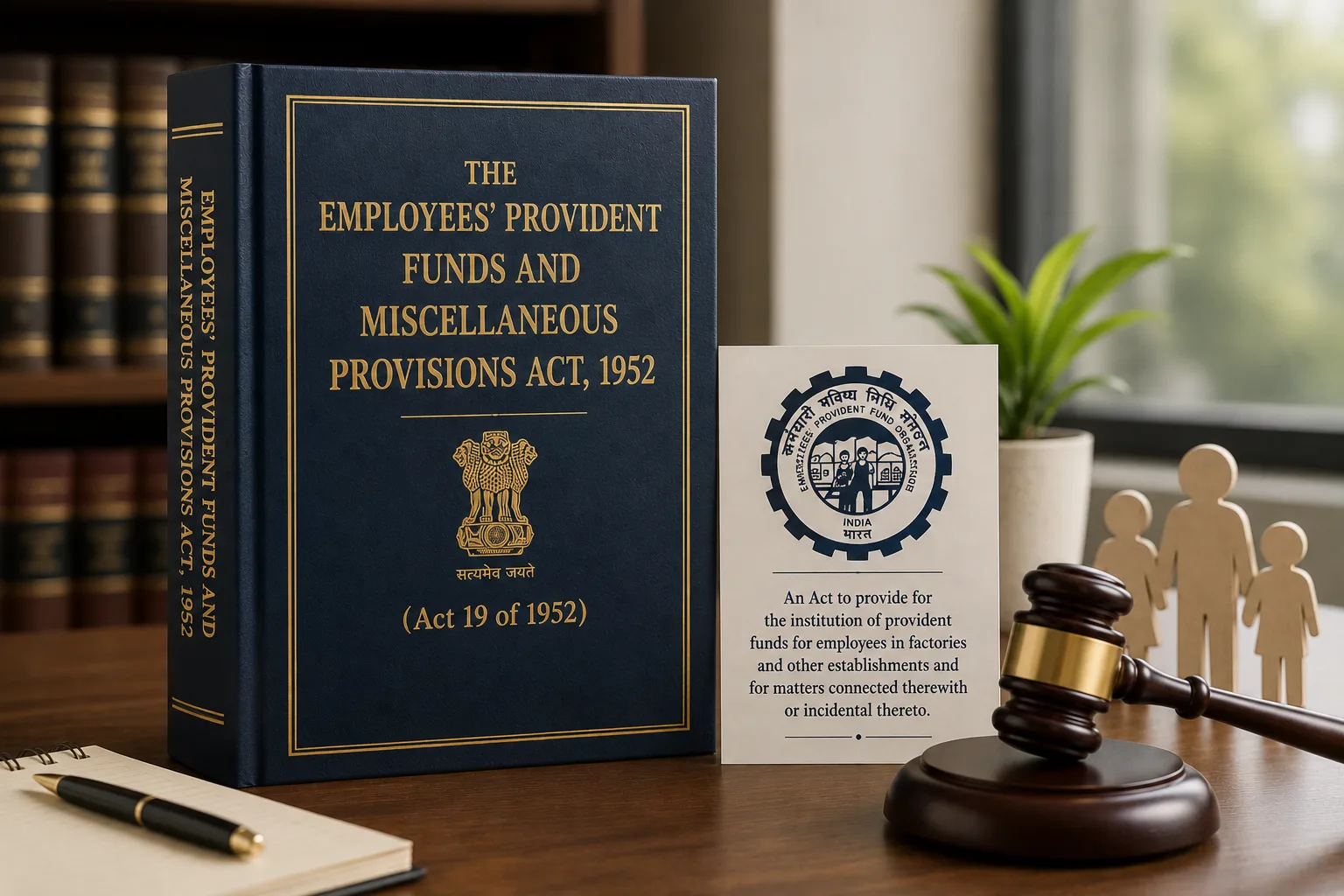
5. Employees' Provident Funds and Miscellaneous Provisions Act, 1952
Employees are also entitled to statutory provident fund benefits in accordance with the Employees’ Provident Funds and Miscellaneous Provisions Act, 1952, wherever applicable.
Although provident fund disputes may not directly concern the legality of termination, delays or disputes relating to PF transfers, withdrawals or employer compliance frequently arise after employment comes to an end.
6. Law of Contract
Many employment disputes involving managerial employees, senior executives, directors and CXOs are substantially governed by contractual principles.
Questions may arise regarding:
- breach of contract;
- wrongful invocation of termination clauses;
- notice period obligations;
- bonus entitlement;
- deferred compensation;
- stock options;
- restrictive covenants; and
- settlement agreements.

In such matters, a detailed contractual analysis is often central to the legal strategy.
Common Scenarios That May Require Legal Advice
No two employment disputes are identical. However, certain situations repeatedly give rise to requests for legal advice.
Sudden Termination Without Prior Communication
Employees occasionally receive a termination letter without any prior indication that their employment was at risk.
Whether such termination is legally sustainable depends upon the employment contract, the applicable legal framework, company policies and the circumstances leading to the decision.
Forced Resignation
Many employees report being encouraged or pressured to resign instead of receiving a formal termination letter.
Such situations should be carefully assessed before any resignation or settlement documents are signed.
Performance Improvement Plan (PIP)
Employees frequently seek legal advice after being placed on a PIP that they believe is unfair or pre-determined.
Each case requires examination of the employer’s performance management process, communications, previous performance records and surrounding circumstances.
Pregnancy and Maternity
Questions frequently arise where performance concerns, disciplinary action or termination allegedly follow shortly after pregnancy disclosure or maternity leave.
The factual chronology often becomes particularly significant in such disputes.
Role Redundancy
Employers may legitimately restructure their business operations.
However, employees sometimes seek advice regarding:
- selection criteria;
- severance benefits;
- replacement by another employee;
- internal transfers; and
- restructuring processes.
Each redundancy exercise should be assessed on its own facts.
Withholding of Full & Final Settlement
Following termination, employees occasionally face delays or disputes concerning:
- salary;
- notice pay;
- leave encashment;
- bonus;
- incentives;
- gratuity;
- reimbursements; and
- contractual severance.
Reviewing the settlement statement before acceptance is often advisable.
Refusal to Issue Relieving or Experience Letters
Relieving letters and experience certificates are often essential for future employment.
Where disputes arise concerning these documents or the contents of employment records, employees may wish to understand the legal options available depending upon the circumstances.
Background Verification (BGV) Concerns
Many professionals worry that a disputed exit may adversely affect future employment opportunities.
Issues relating to employment records, separation documentation and background verification frequently arise during settlement discussions, particularly for employees in multinational corporations and technology companies.
Workplace Investigations
Employment disputes sometimes arise following internal investigations into allegations of misconduct, ethics complaints or policy violations.
The fairness of the investigation process, adherence to internal procedures and the opportunity afforded to the employee to present their case may become relevant considerations depending upon the facts.
Executive Exit Negotiations
Senior professionals often require legal advice before accepting separation terms offered by an employer.
Negotiations may involve:
- severance compensation;
- stock options;
- retention bonuses;
- restrictive covenants;
- confidentiality obligations;
- reference letters;
- exit documentation; and
- post-employment obligations.
A carefully negotiated settlement can often protect both the employee’s financial interests and professional reputation.
Every Employment Dispute Requires an Individual Assessment
There is no universal formula for determining whether a termination is lawful or what remedies may be available.
The legal position depends upon the employment contract, applicable statutes, company policies, documentary evidence, judicial principles and the specific facts of each case.
For this reason, employees should avoid relying solely on general information available online. A legal assessment based on the complete factual matrix is often essential before taking significant steps such as resigning, signing a separation agreement or initiating legal proceedings.
At Divine Lawyers, we approach every employment dispute with a detailed review of the facts, the governing legal framework and the client’s commercial objectives, enabling us to recommend a strategy that is both legally sound and commercially practical.